

Water Damage Restoration Cost in Homewood, IL
Water damage restoration cost in Homewood depends entirely on what a local provider discovers during their initial inspection—the extent of saturation, affected materials, and required drying work all factor into scope. Older homes with basements throughout the area face particular vulnerability to seepage and sump pump failures during heavy seasonal rainfall, and delays in addressing these issues typically expand the work required and the associated cost. Acting quickly when water damage occurs helps contain the problem, which is why connecting with a local restoration provider as soon as possible protects both your property and your budget.
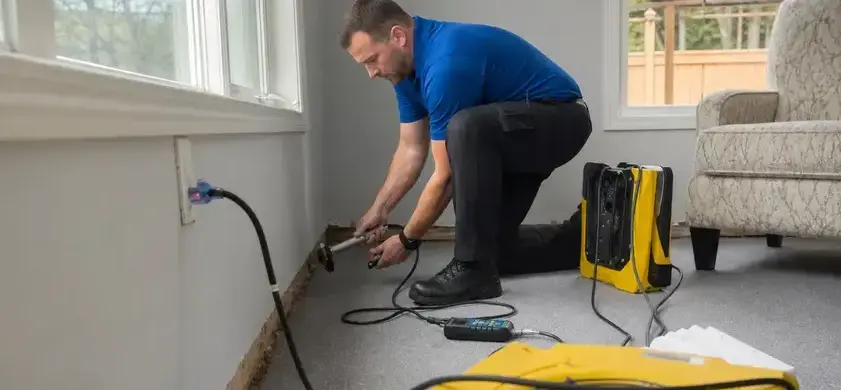
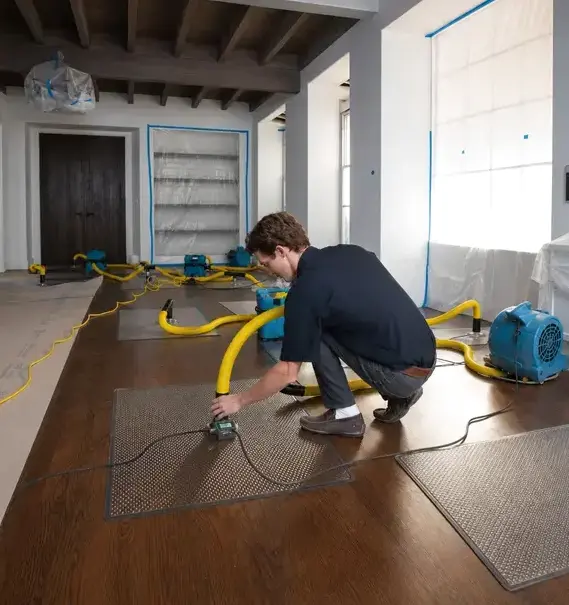
Water Damage Restoration Cost in Homewood, IL
Property owners in Homewood face real exposure to water damage from basement seepage and sump pump failure, concerns that grow more costly the longer they remain unaddressed. Older homes throughout the area, many with full basements, are particularly vulnerable when heavy seasonal rainfall and spring snowmelt overwhelm aging storm sewers and basement drainage systems. Understanding water damage restoration cost means recognizing how quickly water penetrates materials, spreads through foundation spaces, and begins to compromise structural elements and contents. The financial scope of restoration depends entirely on how soon the water intrusion is stopped and drying begins—delay compounds the damage and the work required to reverse it.
Grover Water Damage Restoration connects Homewood property owners with independent local providers who inspect damage on-site and explain exactly what the restoration scope will be and why each step affects cost. These providers assess the category of water involved, measure the square footage affected, identify which materials must be dried in place and which must be removed and replaced, determine drying timeline and equipment requirements, and check for mold development. By connecting you with a local restoration provider quickly—especially in neighborhoods like Downtown Homewood and the Homewood Historic District where older construction is common—you reduce the risk that water damage will expand into costlier secondary damage. The sooner a qualified provider evaluates your property, the clearer your water damage restoration cost becomes.
What Drives Water Damage Restoration Cost in Homewood
Water Category Affects Scope
Clean water from burst pipes costs less to restore than gray water from appliances or black water from sewage. Black water requires removal of contaminated materials and specialized disinfection, substantially increasing the work required.
Area and Materials Drive Labor
Restoration cost depends on how many square feet got wet and which materials absorbed water. Drywall, flooring, cabinets, and insulation that cannot be dried must be removed and replaced, expanding the project significantly.
Drying Time and Equipment Needs
How long drying takes determines equipment rental duration and labor hours. Deep saturation in dense materials requires industrial dehumidifiers and air movers running for days or weeks, raising total restoration cost.
Older Basements and Spring Drainage
Homewood's many older homes with full basements face seasonal water risks when heavy spring rainfall or snowmelt overwhelms aging drainage systems. Sump pump failures or basement seepage in these homes can require extensive drying and potential structural materials removal, affecting total restoration scope.
How Your Water Damage Restoration Cost Is Estimated in Homewood, IL
From your first call to the final invoice, the goal is simple: understand what is driving Water Damage Restoration Cost for your property before any work begins.
Call Grover for a Local Provider
When you contact Grover, we connect you with an independent water damage restoration provider serving Homewood. The sooner you call—especially with active water intrusion—the faster an assessment can begin, which often limits how much of your home requires drying, removal, and rebuilding, directly affecting restoration cost.
Get an On-Site Assessment and Estimate
The provider inspects the wet areas, identifies the water source and category (clean, gray, or black water), measures square footage affected, and evaluates which materials—drywall, flooring, cabinetry—must be removed. They assess drying time and equipment needs based on what got wet, how deep the saturation runs, and whether mold has begun; this detailed scope determines water damage restoration cost.
Review the Estimate Before Work Starts
You receive a detailed breakdown of the restoration scope and associated cost before any work begins. The estimate reflects the specific damage found at your property—water category, affected area, materials involved, equipment and labor required—so you understand exactly what drives the water damage restoration cost for your situation.
Wondering about Water Damage Restoration Cost in Homewood? Get an on-site estimate from a local provider.
Call Now — (708) 773-7699Water Damage Restoration Cost Factors in Homewood
Homewood's older housing stock, with full basements typical of Chicago-area suburbs, creates specific cost drivers for water damage restoration. Basement seepage and sump pump failures are frequent concerns in the area, and when they occur, the scope of restoration—and its cost—depends on how quickly the damage is addressed. Water that sits in a basement for hours versus days affects whether structural materials, insulation, and flooring can be dried in place or must be removed and replaced, directly shifting the total work required.
Heavy seasonal rainfall and spring snowmelt common to the region can overwhelm aging storm sewers and basement drainage systems, making water damage restoration costs highly variable. The price depends on the category of water involved (clean water from a burst pipe versus contaminated water from a backed-up sewer line), the square footage affected, which building materials absorbed water, how long the drying process will take, and whether mold has begun to develop. Equipment needs, labor hours, and material replacement all scale with these factors. Acting quickly—extracting standing water and starting the drying process within hours—typically keeps the scope smaller and the restoration more straightforward than waiting, which allows damage to spread into walls, subflooring, and structural framing.
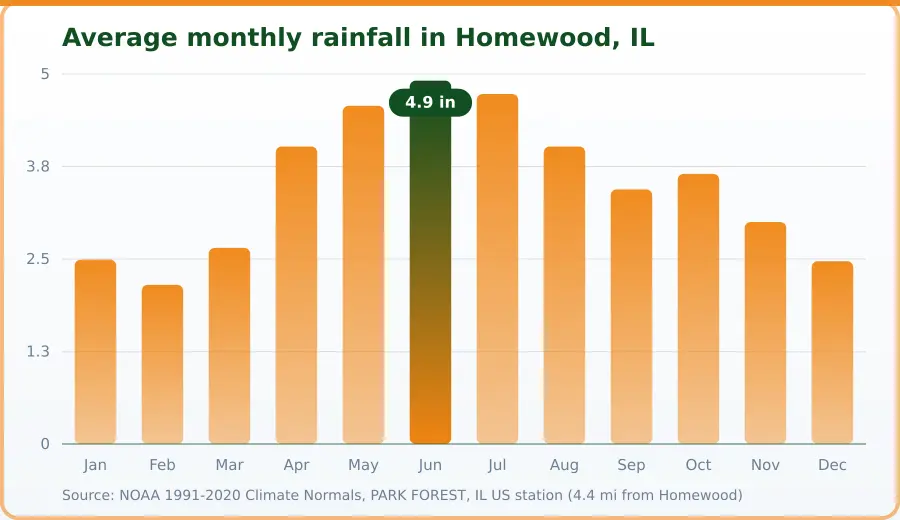
| Period | Monthly rainfall (in) |
|---|---|
| Jan | 2.5 |
| Feb | 2.2 |
| Mar | 2.7 |
| Apr | 4 |
| May | 4.6 |
| Jun | 4.9 |
| Jul | 4.7 |
| Aug | 4 |
| Sep | 3.4 |
| Oct | 3.7 |
| Nov | 3 |
| Dec | 2.5 |
Source: NOAA 1991-2020 Climate Normals, PARK FOREST, IL US station (4.4 mi from Homewood). Retrieved October 4, 2026.
Seasonal Water Damage Restoration Cost Drivers in Homewood
Spring: Snowmelt and Seepage
Spring thaw and heavy rainfall push water into older basements through foundation cracks and overtaxed drainage systems, raising restoration costs when saturation spreads across finished spaces and materials absorb moisture over time. Quick response limits the scope of drying equipment and drywall removal needed.
Summer: Sudden Downpours
Intense summer storms can overwhelm gutters and yard drainage, forcing water into basements and lower levels through window wells and foundation gaps. The volume and speed of water entry determine whether extraction, structural drying, and material replacement drive up the total restoration cost.
Fall: Clogged Drains
Fallen leaves and debris block gutters, downspouts, and yard drainage systems, backing water into foundations and crawl areas during autumn rains. Restoration costs rise when standing water sits longer before removal, increasing the drying time, equipment rental, and risk of material damage that requires replacement.
Winter: Freeze-Thaw Cycles
Repeated freezing and thawing can crack foundation walls and open pathways for seepage when ice melts, while burst pipes from interior freezing create sudden flooding inside walls and under floors. The category of water, extent of affected materials, and whether drywall or flooring must be removed all shape the final restoration cost.
Homeowner Safety Toolkit
Verify Your Homewood, IL Water Damage Restoration Company
Before you hire anyone, use these independent national resources to confirm credentials, standards, and track record.
IICRC
Sets the technical standards for water damage restoration. Confirm a company's technicians hold real, current IICRC certification before you hire them.
Verify CertificationEPA
The federal government's own guidance on drying out a water-damaged home fast enough to keep mold from taking hold.
Mold Prevention GuideBBB
Look up any restoration company's complaint history, customer reviews, and accreditation status — a free, independent check before you hire.
Check StandingWater Damage Restoration Cost FAQs — Homewood, IL
The extent of damage, materials affected, and how long water sits determine cost most significantly. Water category—clean, gray, or contaminated—also drives expenses. In Homewood's older homes with full basements, the size of the affected area and whether structural drying or material replacement is needed will shape the final restoration cost substantially.
Delays allow water to spread deeper into materials, drywall, flooring, and structural components, multiplying restoration scope and cost. The longer water remains, the higher the risk of secondary damage that requires more extensive—and costly—work. Acting quickly typically limits the damage footprint and keeps overall restoration expenses lower.
A local restoration provider will inspect your property in person to assess the water damage's scope, affected materials, and drying requirements. After the on-site evaluation, they provide a detailed estimate specific to your situation. This personalized assessment ensures the cost reflects your actual restoration needs rather than generic assumptions.
Coverage depends entirely on your specific policy and the damage source. Some water events are covered; others are not. Contact your insurance agent to understand your policy terms. Grover connects you with local providers who can document the damage for your claim, but we cannot guarantee coverage or outcomes.
Grover connects Homewood property owners with independent local providers quickly for on-site inspections and estimates. Response times depend on provider availability and current demand, but local providers prioritize active water damage emergencies. Contact Grover to begin the referral process and get an assessment underway without delay.
Heavy seasonal rainfall and spring snowmelt strain aging drainage systems common in the region, increasing basement seepage and sump pump failure risks. When groundwater and runoff overwhelm these systems, restoration scope expands—and so does cost. Understanding these seasonal patterns helps homeowners prepare and respond quickly to minimize damage.
Questions about Water Damage Restoration Cost in Homewood, IL? Call (708) 773-7699 to arrange a local on-site estimate.
Call Now — (708) 773-7699Areas We Serve Near Homewood, Illinois
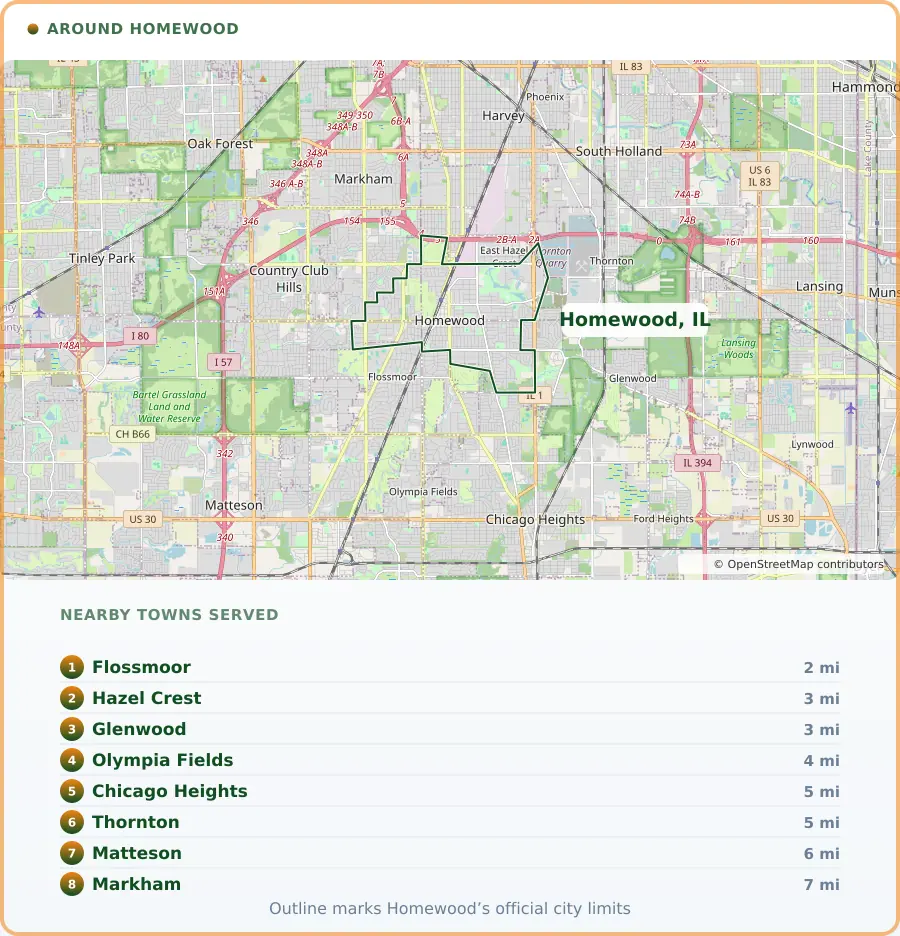
Based in Homewood, IL, with 8 nearby communities inside the service area — near enough to reach quickly, not just listed on a map.
Homewood, IL Information
Just south of Chicago, Homewood, IL carries the steady rhythm of a true rail town. The Canadian National yard nearby and a busy Metra station tie this community of about 19,300 to the Southland region's long freight legacy, while plenty of residents ride the rails north each day for work in the city. Downtown Homewood still anchors daily life, its storefronts, schools, and public services forming the backbone of the local economy alongside familiar names like Walmart, Jewel-Osco, and ALDI.
It's a village built on dependable institutions — strong schools, an active public library, and a municipal government that keeps neighborhoods like West Homewood and East Homewood running smoothly. Add a friendly stretch of local dining and shops, and you get a quietly confident suburb that knows exactly what it is.
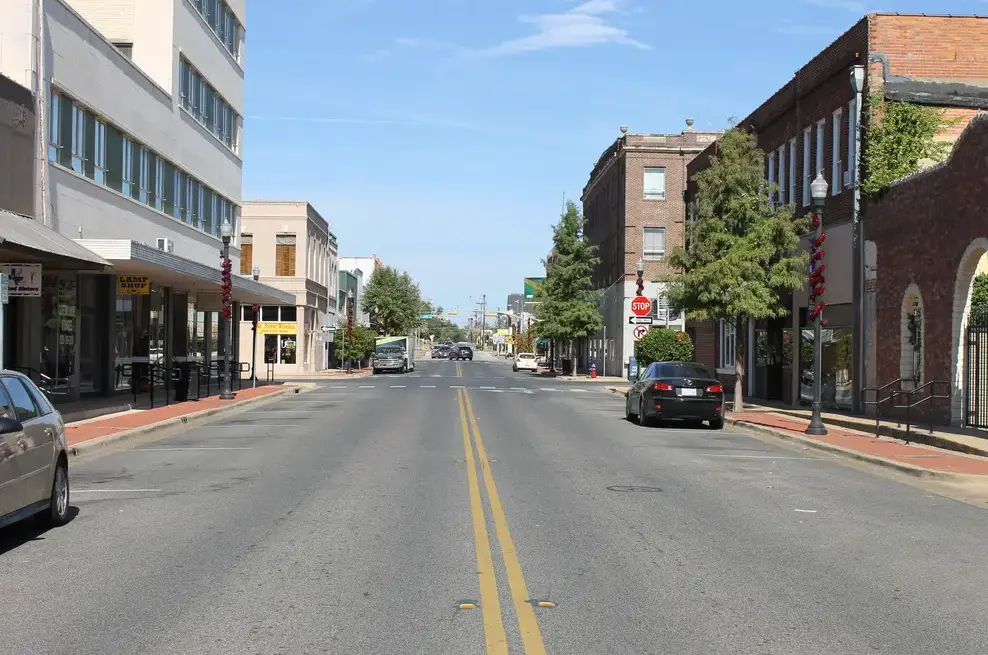
Photo: Billy Hathorn, CC BY-SA 3.0