

Ceiling Water Damage in Homewood, IL
Homewood's older homes with full basements face particular risk from spring snowmelt and seasonal heavy rainfall that can overwhelm aging drainage systems, creating conditions where water seeps upward through foundation walls and into ceiling cavities above. Ceiling water damage often develops gradually from basement moisture migration, making early detection and prompt restoration critical to prevent structural decay and secondary damage. Grover connects Homewood property owners with local restoration providers who can assess water intrusion at its source and address ceiling damage before it spreads.
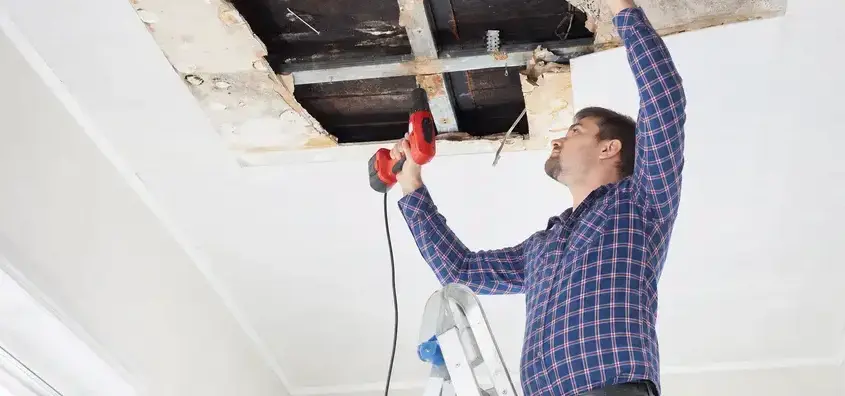
Ceiling Water Damage Restoration in Homewood, IL
Homewood's older homes, many featuring full basements typical of Chicago-area suburbs, face particular vulnerability to water intrusion from above. Heavy seasonal rainfall and spring snowmelt place significant stress on aging roof systems, gutters, and attic drainage—conditions that frequently lead to ceiling water damage when protective barriers fail. Property owners throughout Homewood and surrounding areas recognize that water entering through a compromised ceiling demands swift action to prevent structural deterioration, insulation breakdown, and secondary damage to walls and floors below.
Grover Water Damage Restoration connects Homewood property owners with independent local restoration providers who specialize in identifying and addressing ceiling water damage from its source. These providers assess roof leaks, trace water paths through attic spaces and interior framing, and work to dry affected materials thoroughly before mold or decay spreads. They handle not only the visible ceiling damage but also hidden moisture that can linger behind walls and in insulation—the kind of thorough approach that protects your home's long-term structural integrity. When ceiling water damage strikes, reaching out for a rapid local response puts you on the path to recovery.
Why Homewood Property Owners Choose Grover Water Damage Restoration
Fast Response to Ceiling Water Damage
Water spreading across a ceiling demands immediate action. Grover connects you with local independent restoration providers ready to assess and begin mitigation quickly, preventing further structural compromise and secondary damage.
Thorough Ceiling Water Damage Assessment
Ceiling water damage often hides behind surfaces. Independent providers in Grover's network conduct detailed inspections to identify moisture extent, trace the source, and outline a complete restoration plan tailored to your property.
Clear Communication Throughout Restoration
Understanding what happened to your ceiling and how it will be fixed matters. Local independent providers connected through Grover keep you informed at every stage, explaining findings, next steps, and timelines in straightforward terms.
Drainage Solutions for Older Homewood Homes
Homes throughout Homewood often experience ceiling water damage traced back to basement seepage during heavy seasonal rainfall. Grover connects you with local providers experienced in addressing water intrusion from aging drainage systems that can compromise upper floors.
How Our Ceiling Water Damage Process Works
From your initial call to the final inspection, we provide a structured, professional, and efficient process to ensure your property is fully restored after Ceiling Water Damage.
Report Your Ceiling Water Damage
Contact Grover to describe ceiling water damage at your Homewood property—whether it's active dripping, staining, or soft drywall. We'll connect you with a local restoration provider who can schedule an urgent assessment, often within hours of your call.
Assess Ceiling Damage & Source
A local provider will inspect your ceiling to identify where water is entering—roof leaks, plumbing failures, or seepage from upper floors—and evaluate the extent of structural damage and saturated materials. This diagnosis guides the drying and repair strategy specific to your ceiling.
Dry & Restore Your Ceiling
The restoration provider removes damaged drywall or plaster, dries the cavity and framing, and treats the area to prevent mold growth. Once the ceiling is fully dry, repairs or replacement are completed to restore your home's integrity.
Dealing with Ceiling Water Damage in Homewood? Get fast, professional help.
Call Now — (708) 773-7699Ceiling Water Damage Services for Homewood
Homewood's older housing stock, predominantly built with full basements, creates a distinct pattern of water intrusion risk that often manifests in ceiling damage. When basement seepage occurs—a common concern in established neighborhoods like the Homewood Historic District—water can migrate upward through walls and structural cavities before appearing as stains, soft spots, or active leaks in ceilings above. Sump pump failures compound this risk, especially during periods of heavy rainfall and spring snowmelt when groundwater pressure builds against aging foundation walls and overwhelms drainage systems designed decades ago.
Ceiling water damage in Homewood frequently develops gradually, making early detection crucial. Discoloration on an upper-floor or attic ceiling may indicate that water has traveled horizontally through rim joists or vertical cavities for weeks before becoming visible. The longer basement water seepage continues unaddressed, the higher the likelihood that ceiling materials will absorb moisture and deteriorate. Grover Water Damage Restoration connects Homewood property owners with independent local restoration providers who can assess the source—whether foundation seepage, failed drainage, or compromised upper-level plumbing—and recommend the right remediation approach to prevent further ceiling damage.
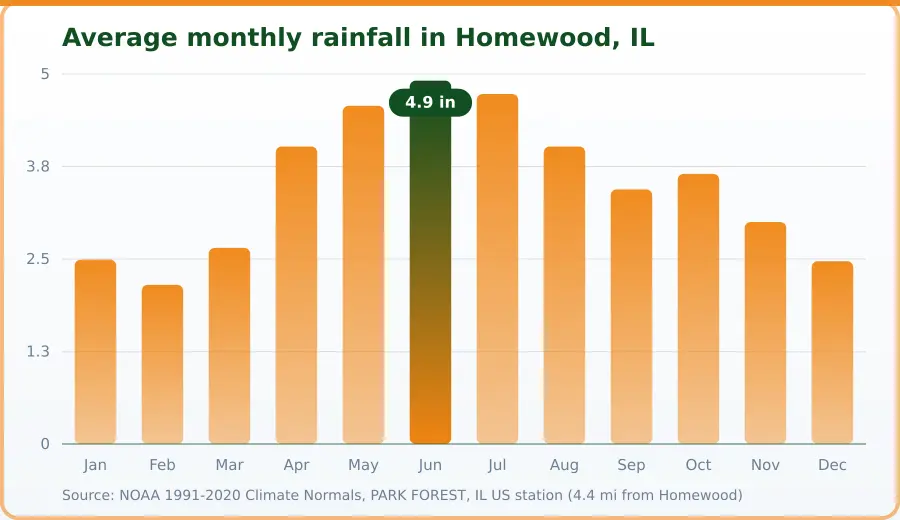
| Period | Monthly rainfall (in) |
|---|---|
| Jan | 2.5 |
| Feb | 2.2 |
| Mar | 2.7 |
| Apr | 4 |
| May | 4.6 |
| Jun | 4.9 |
| Jul | 4.7 |
| Aug | 4 |
| Sep | 3.4 |
| Oct | 3.7 |
| Nov | 3 |
| Dec | 2.5 |
Source: NOAA 1991-2020 Climate Normals, PARK FOREST, IL US station (4.4 mi from Homewood). Retrieved October 4, 2026.
Seasonal Ceiling Water Damage Patterns in Homewood
Spring: Snowmelt and Roof Stress
Spring thaw and heavy rainfall push water through aging roof systems and overwhelmed drainage infrastructure, forcing ceiling leaks downward through upper floors. Grover connects Homewood property owners to local restoration providers who identify and document ceiling damage, extract standing water, and begin drying before mold takes hold.
Summer: Heat and Hidden Seepage
Warm, humid summers in the region intensify moisture trapped behind ceiling cavities and above drop ceilings, where initial leaks from spring often go unnoticed. Local providers accessed through Grover detect active seepage, assess structural integrity of wet drywall and insulation, and recommend targeted repairs before hidden decay spreads.
Fall: Clogged Gutters and Overflow
Falling leaves and debris clog gutters and downspouts, redirecting rainwater back up under roof edges and into ceiling joists and attic spaces. Grover's network connects you with providers who clear water accumulation, inspect ceiling framing for saturation, and stabilize affected areas before winter's freeze-thaw cycle worsens damage.
Winter: Freeze, Ice Dams, and Collapse Risk
Freezing temperatures create ice dams along roof edges, backing water under shingles and into ceilings; older Homewood homes with full basements often share aging roof systems prone to this damage. Grover helps property owners reach local restoration specialists who remove ice safely, dry ceiling cavities, and prevent structural failure before spring rains return.
Homeowner Safety Toolkit
Verify Your Homewood, IL Water Damage Restoration Company
Before you hire anyone, use these independent national resources to confirm credentials, standards, and track record.
IICRC
Sets the technical standards for water damage restoration. Confirm a company's technicians hold real, current IICRC certification before you hire them.
Verify CertificationEPA
The federal government's own guidance on drying out a water-damaged home fast enough to keep mold from taking hold.
Mold Prevention GuideBBB
Look up any restoration company's complaint history, customer reviews, and accreditation status — a free, independent check before you hire.
Check StandingCeiling Water Damage FAQs — Homewood, IL
Ceiling water damage typically appears as discolored patches, sagging drywall, peeling paint, or visible mold spots on your ceiling surface. You may notice soft or spongy areas when you touch the ceiling, or water actively dripping during or after rain. In older Homewood homes, damage can spread quickly through aged materials, making prompt assessment critical to prevent structural deterioration.
Grover Water Damage Restoration works to connect Homewood property owners with local independent restoration providers quickly when ceiling water damage occurs. Response times depend on provider availability in your area, but our referral network is designed to minimize delay during urgent situations. Contact Grover as soon as you discover active ceiling water damage so we can match you with a local provider promptly.
Ceiling water damage repair costs depend on the damage's extent, affected area size, source of the water (roof leak, plumbing, etc.), material type (drywall, plaster, popcorn texture), and whether structural elements require attention. Older homes in Homewood may have additional factors affecting scope and cost. Independent providers in our network will assess your specific situation and discuss pricing details with you directly.
The restoration process begins with identifying the water source to stop active leaking. Providers then assess moisture levels, remove damaged ceiling materials if necessary, dry affected areas thoroughly, and address any underlying issues. Finally, they restore the ceiling through patching, painting, or replacement. Your local restoration provider will explain each step and discuss your property's specific needs based on the damage severity.
Preventing ceiling water damage starts with addressing its root cause—whether that's roof maintenance, gutter cleaning, plumbing inspection, or proper attic ventilation. Regular inspections help catch small leaks before they reach your ceiling. In Homewood's climate, where seasonal rainfall and spring conditions can stress aging roof and drainage systems, staying proactive with maintenance reduces recurrence risk significantly.
Ceiling water damage in Homewood is particularly common during spring when seasonal rainfall and snowmelt intensify, stressing older roofing and drainage infrastructure. Heavy rain events throughout the year can also trigger leaks in aging roof materials common to older homes in the area. Being alert to ceiling damage risk during wet seasons and after heavy storms helps you catch problems early.
Dealing with Ceiling Water Damage in Homewood, IL? Call (708) 773-7699 for 24/7 help.
Call Now — (708) 773-7699Areas We Serve Near Homewood, Illinois
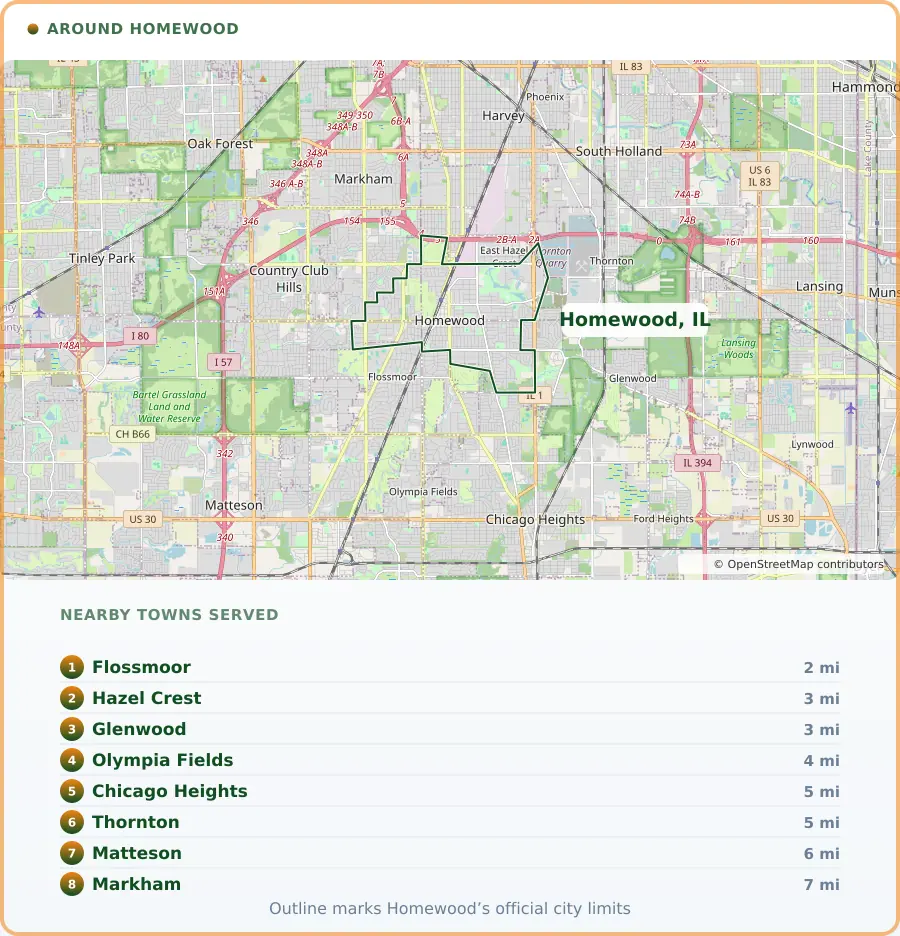
Based in Homewood, IL, with 8 nearby communities inside the service area — near enough to reach quickly, not just listed on a map.
Homewood, IL Information
Just south of Chicago, Homewood, IL carries the steady rhythm of a true rail town. The Canadian National yard nearby and a busy Metra station tie this community of about 19,300 to the Southland region's long freight legacy, while plenty of residents ride the rails north each day for work in the city. Downtown Homewood still anchors daily life, its storefronts, schools, and public services forming the backbone of the local economy alongside familiar names like Walmart, Jewel-Osco, and ALDI.
It's a village built on dependable institutions — strong schools, an active public library, and a municipal government that keeps neighborhoods like West Homewood and East Homewood running smoothly. Add a friendly stretch of local dining and shops, and you get a quietly confident suburb that knows exactly what it is.
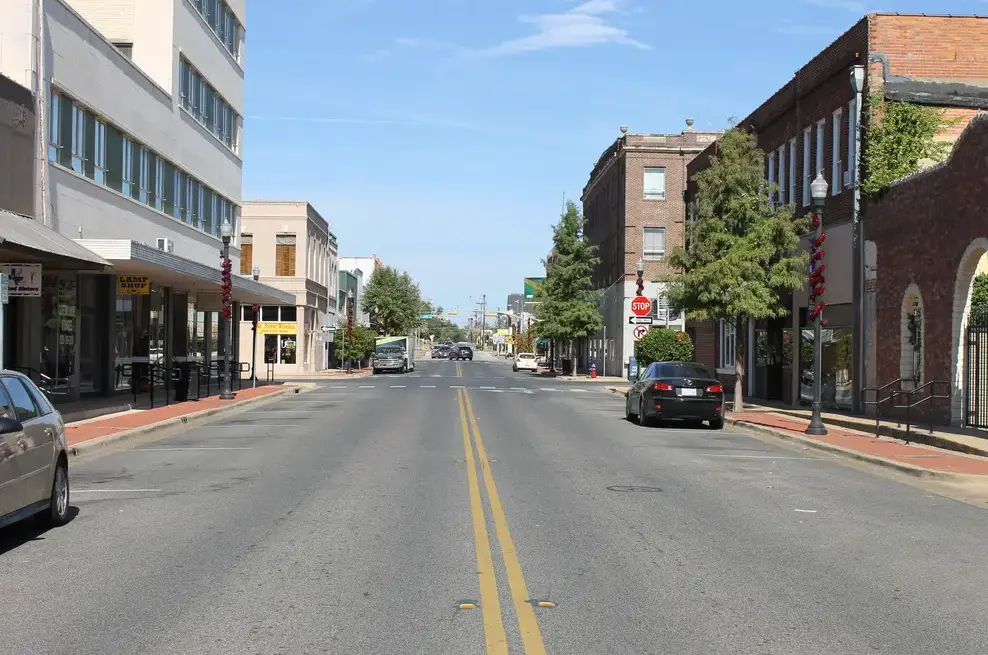
Photo: Billy Hathorn, CC BY-SA 3.0